We Repair Before We Replace
An original part that can be re-glued beats a new part that merely matches. When we do have to make one, we choose stock that moves the same way as the wood beside it.
The Method
Almost every stage of this work happens by hand. Stripping a finish, weaving a seat, rubbing out a surface: each one is a judgement call, and a machine cannot make it for you.
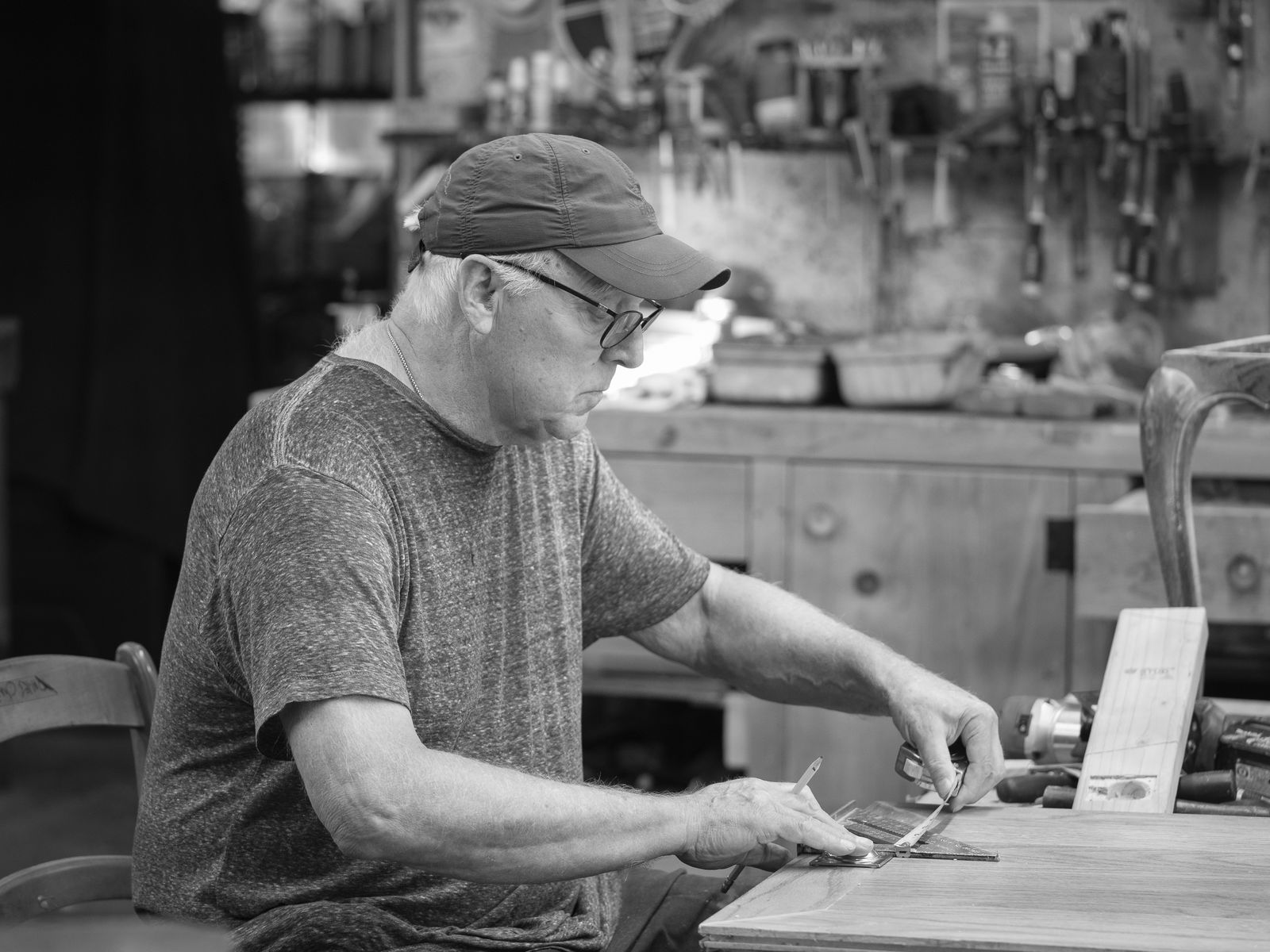
An original part that can be re-glued beats a new part that merely matches. When we do have to make one, we choose stock that moves the same way as the wood beside it.
We use hide glue and shellac on purpose. Whoever opens the piece up in fifty years can undo both of them, which is what separates restoring something from simply refinishing it.
We keep the patina, the worn arms, the darkened edge where a hand has rested for a hundred years. Sometimes the right answer is to do almost nothing, and we will say so.
Materials
Most of what we reach for has been on the shelf in one form or another since the shop opened. Hide glue because it can be released with heat and water. Shellac because it burns into itself, so a new coat melts into the old one instead of sitting on top.
Seats come out in cane, rush, splint or Danish cord, depending on what the chair was born with. We match the original wherever we can identify it.